

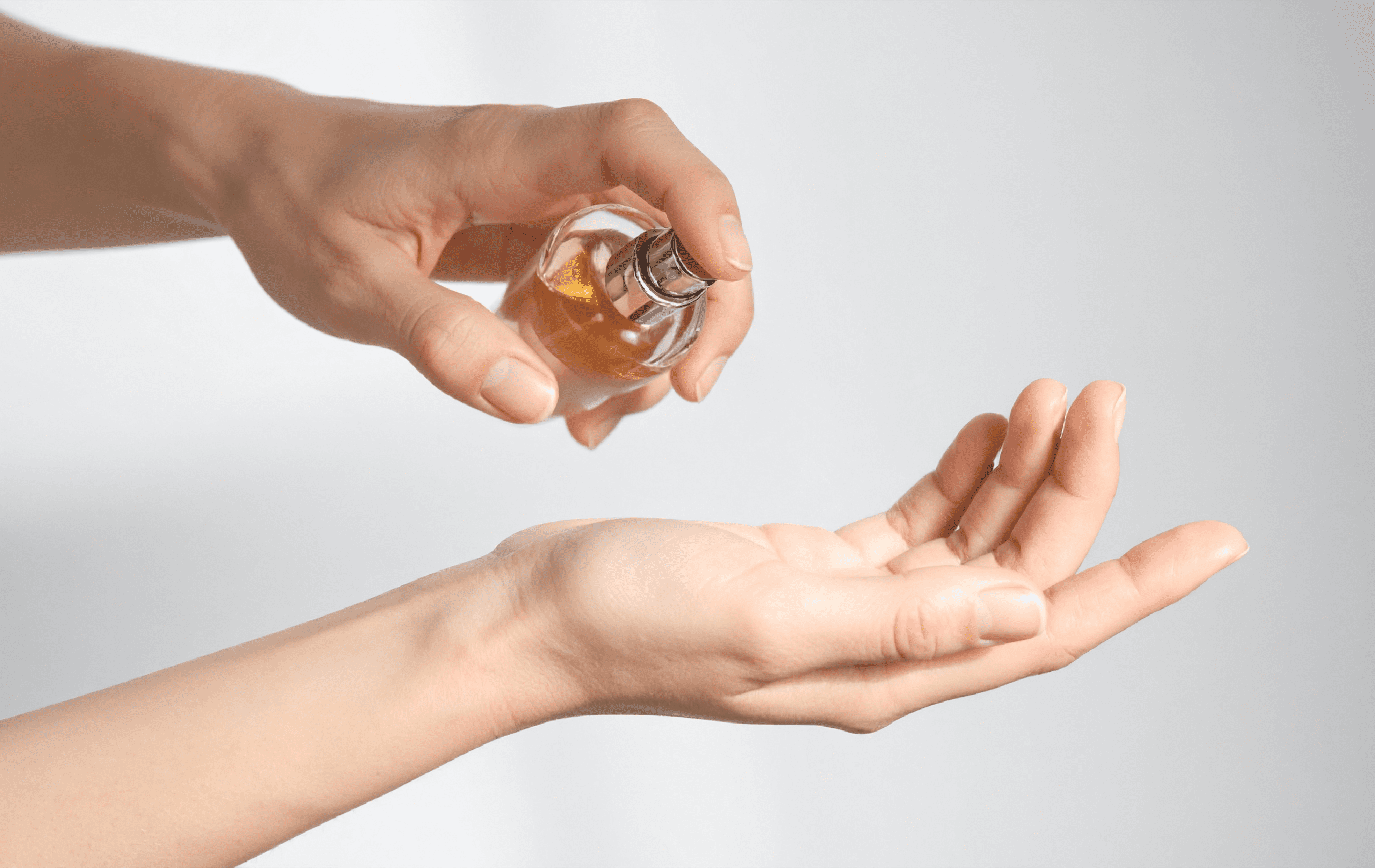
By 31 July 2026, beauty brands placing cosmetic products on the EU market must ensure that their labels include – when applicable – the disclosure of 56 additional fragrance allergens.
This deadline represents a major regulatory milestone, requiring manufacturers to undertake several compliance actions, including updates to Product Information Files (PIFs) and product labelling. As a result, the changes are expected to impact the vast majority of cosmetics manufacturers.
Fragrance allergens: EU regulatory framework
In 1999, the Scientific Committee on Cosmetic Products and Non-Food Products Intended for Consumers (SCCNFP) – now known as the Scientific Committee on Consumer Safety (SCCS) – identified 26 fragrance substances that needed to be declared on product labels to help prevent allergic reactions.
These substances were subsequently incorporated into the EU Cosmetics Regulation and must be labelled in accordance with Annex III requirements.
Since then, ongoing reviews of clinical and experimental data have shown that many additional fragrance substances can act as sensitizers in humans. In response, the SCCS published an opinion in 2011 identifying new allergens relevant for consumer protection.
Based on the SCCS assessment, Commission Regulation (EU) 2023/1545 of 26 July 2023 introduced 56 new fragrance allergens that must be individually declared on cosmetic product labels.
Fragrance allergens: what are they?
As outlined in the preamble to Commission Regulation (EU) 2023/1545, fragrance substances are organic compounds with pleasant characteristic odours. They are widely used in perfumes and other scented cosmetic products, as well as in detergents, fabric softeners, and various consumer products.
However, skin contact with sufficient quantities of certain fragrance ingredients can lead to the development of contact allergies, often through repeated use of cosmetic products.
Upon re-exposure to an allergen, individuals may develop eczema (allergic contact dermatitis).
The measures established by the EU Commission aim at providing information on the presence of individual fragrance allergens in cosmetic products so that sensitised persons can avoid contact with the substance to which they are allergic.
What are the documents required to ensure compliance?
In addition to standard documentation – such as raw material specifications, Safety Data Sheets (SDS), and Certificates of Analysis (CoA) – fragrance ingredients require specific supporting documents:
- IFRA Certificate
This certificate confirms that the fragrance complies with the standards set by the International Fragrance Association. These standards define conditions of use for fragrance ingredients, based on scientific evaluations conducted by the Research Institute for Fragrance Materials.
- Allergen declaration / Allergen list
This document should provide a detailed breakdown of the fragrance composition in relation to all 82 fragrance allergens listed in Annex III of the EU Cosmetics Regulation. Based on this information, manufacturers can determine which allergens must be declared on product labels under the updated requirements.
Additionally, it is advisable to perform analytical testing on the finished product to verify both the presence and concentration of fragrance allergens in the final formulation.
What are the thresholds for disclosure?
In the EU, the thresholds for the disclosure of fragrance allergens are as follows:
- Leave-on products: Allergens must be labeled if their concentration in the finished product exceeds 0.001%.
- Rinse-off products: Allergens must be labeled if their concentration in the finished product exceeds 0.01%.
Does this concern only synthetic fragrances?
Fragrance allergens are not limited to synthetic (chemical) fragrance compounds. They are also naturally present in many botanical ingredients. Essential oils and other plant-derived extracts can contain allergenic substances that are subject to the same labelling requirements under EU legislation.
Botanical oils should therefore be accompanied by appropriate documentation, such as an IFRA certificate where applicable, and information on their allergen content.
It is generally advisable to assess – and, when appropriate, analytically test – finished products that contain high concentrations of essential oils or herbal extracts to verify the presence and levels of regulated allergens, ensuring accurate labelling and compliance.
What actions must beauty brands take to comply with the July deadline?
To comply with the July 2026 deadline, beauty brands should take several key steps:
- Update Product Information Files (PIFs)
Brands should contact their raw material suppliers to obtain updated documentation for fragrance ingredients, including revised specifications, IFRA certificates (where applicable), and allergen declarations. - Assess allergen concentrations
Using the updated information, brands must evaluate the concentration of regulated fragrance allergens in their finished products. If any allergen exceeds the thresholds set out in Annex III of the EU Cosmetics Regulation, it must be declared on the product label. - Update product labelling
Where required, the ingredients list on labels should be revised to include the relevant allergens, ensuring compliance before placing products on the market after the deadline. - Update CPNP notifications
Where changes to labelling occur, it is advisable to update the product notification on the Cosmetic Products Notification Portal accordingly. - Review and update the CPSR
It is advisable to update the Cosmetic Product Safety Report (CPSR) – which sould be typically reviewed every 3 to 4 years – to incorporate the new allergen information and allow the assessor to evaluate the safety of the product based on the latest data.
What is the definition of “placing on the market”?
The July 2026 deadline applies exclusively to products that are placed on the EU market after that date. Products already made available on the EU market before the deadline may continue to be sold until 31 July 2028.
The EU Blue Guide provides the relevant definition of “placing on the market.”
A product is considered to be placed on the market when it is made available for the first time on the Union market. Under EU harmonisation legislation, each individual product can only be placed on the market once.
This means that:
- Placing on the market occurs when a manufacturer or importer supplies a product for the first time – either to a distributor or directly to an end user.
- Any subsequent transaction (e.g. distributor to distributor or distributor to consumer) is considered “making available on the market,” not placing on the market.
- The concept applies to each individual unit, not to a product type or model.
As a result, even if a product type was previously marketed, any new units placed on the market after new regulatory requirements take effect must comply with those updated requirements.
Situations that do not constitute placing on the market
According to the EU Blue Guide, placing on the market does not occur in the following cases:
- Products manufactured for own use, unless explicitly covered by the relevant legislation
- Products purchased by a consumer outside the EU and brought into the EU for personal use
- Transfers from a manufacturer in a third country to an authorised representative in the EU
- Products entering the EU exclusively for transit, warehousing, temporary storage
- Products manufactured in the EU for export only
- Pre-production units transferred for testing or validation
- Products displayed at trade fairs or exhibitions under controlled conditions
- Products still held in the manufacturer’s or importer’s stock and not yet supplied for distribution, consumption, or use
For a complete overview of cosmetic regulatory deadlines in 2026, please refer to our 2026 Timetable for Cosmetics Businesses.
To never miss a regulatory update, subscribe to COSlaw (free membership). For any questions on formula compliance, bans, and provisions, contact COSlaw Team here or at coslaw@obelis.net.
References
European Commission. (2023). Commission Regulation (EU) 2023/1545 of 26 July 2023 amending Regulation (EC) No 1223/2009 of the European Parliament and of the Council as regards labelling of fragrance allergens in cosmetic product. Retrieved on 27/07/2023.
European Commission. (2022). Opinion on Fragrance allergens in cosmetic products. Retrieved on 08/04/2026.
SCCS. (2011). Opinion on Fragrance allergens in cosmetic products. Retrieved on 08/04/2026.
Leave a Reply