

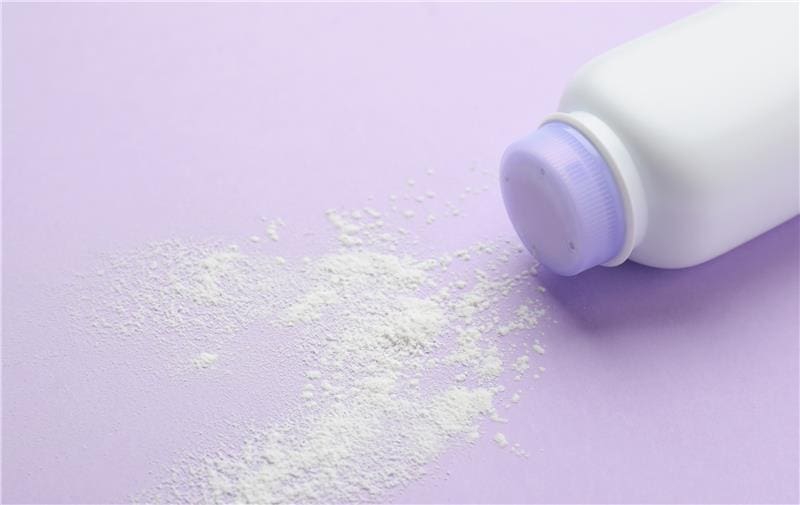
In January 2026, the Health and Safety Executive (HSE) published its assessment report of talc in cosmetic products. Specifically, the technical report focuses on the proposed CMR classifications for talc under the GB Classification, Labelling and Packaging Regulation (GB CLP Regulation). Overall, the UK Agency does not consider the available data as sufficient to support classification for carcinogenicity. In this assessment, talc containing asbestos is not included.
A major concern is that talc deposits often occur alongside asbestos
Talc is a naturally occurring magnesium silicate mineral (Mg₃(OH)₂Si₄O₁₀) widely used across many industries, including pharmaceuticals, cosmetics, rubber, paper, ceramics, agriculture, and food. This mineral functions as a filler, carrier, separator, processing aid, or anticaking agent. In cosmetic products, talc is specifically used in body powders and personal care products. A major concern is that talc deposits often occur alongside asbestos, a well‑established human carcinogen. Even extremely low asbestos levels render talc carcinogenic. The UK technical report explicitly excludes talc containing asbestos.
EU classifies talc as CMR substance
In the EU, the Netherlands carried out a risk management options analysis (RMOA) focusing on occupational exposure to talc and later submitted a harmonised classification proposal. The analysis concluded that talc not containing asbestos or asbestiform fibres should be classified as Carc. 2 (H351) and STOT RE 1 (H372, lungs via inhalation). The EU Committee for Risk Assessment (RAC) agreed on this classification. At the same time, RAC recommended a more severe carcinogenicity classification, upgrading talc (without asbestos/asbestiform fibres) to Carc. 1B (H350) under CLP criteria. Talc is expected to be banned in the EU during 2027.
UK assessment of talc: the Agency (partially) disagrees on the CMR classification
The UK Agency reviewed the RAC Opinion, its supporting rationale, and any additional scientific evidence submitted to the HSE, assessing everything against the GB CLP Regulation classification criteria and relevant technical guidance. The Agency supports RAC’s proposed classification of talc as STOT RE 1; H372 (lungs, inhalation). RAC proposed classifying talc as Carc. 1B; H350. The Agency disagrees, stating that the available data are insufficient to justify a carcinogenicity classification. Overall, the Agency does not support the RAC Opinion.
Further differences between EU and UK assessments
In 2025, regulatory assessments of cosmetic ingredients also diverged, with tea tree oil standing out as a notable example. The EU classifies tea tree oil as a reproductive toxicant (Repr. 2), while Great Britain’s HSE has removed this classification. As a result, the EU and UK now differ in how TTO is regulated, potentially affecting allowed concentrations and cosmetic market requirements.
References:
HSE (2026). Agency technical report on the classification and labelling of: talc (not containing asbestos or asbestiform fibres). Retrieved on 22/01/2026.
Leave a Reply