

The EU Deforestation Regulation (EUDR) aims to reduce the EU’s contribution to global deforestation, forest degradation, gas emissions, and biodiversity loss. The EUDR applies to commodities and relevant products listed in its Annex I. These include cattle, cocoa, coffee, oil palm, rubber, soya, and wood, and some of their derivatives.
How does the EUDR affect cosmetic products?
Commission Delegated Regulation (EU) 2026/2102 amended the scope of the EUDR. Initially not applicable to finished products, latest changes to Annex I of the EUDR put focus on certain finished cosmetics. Products newly added to the regulation’s scope include:
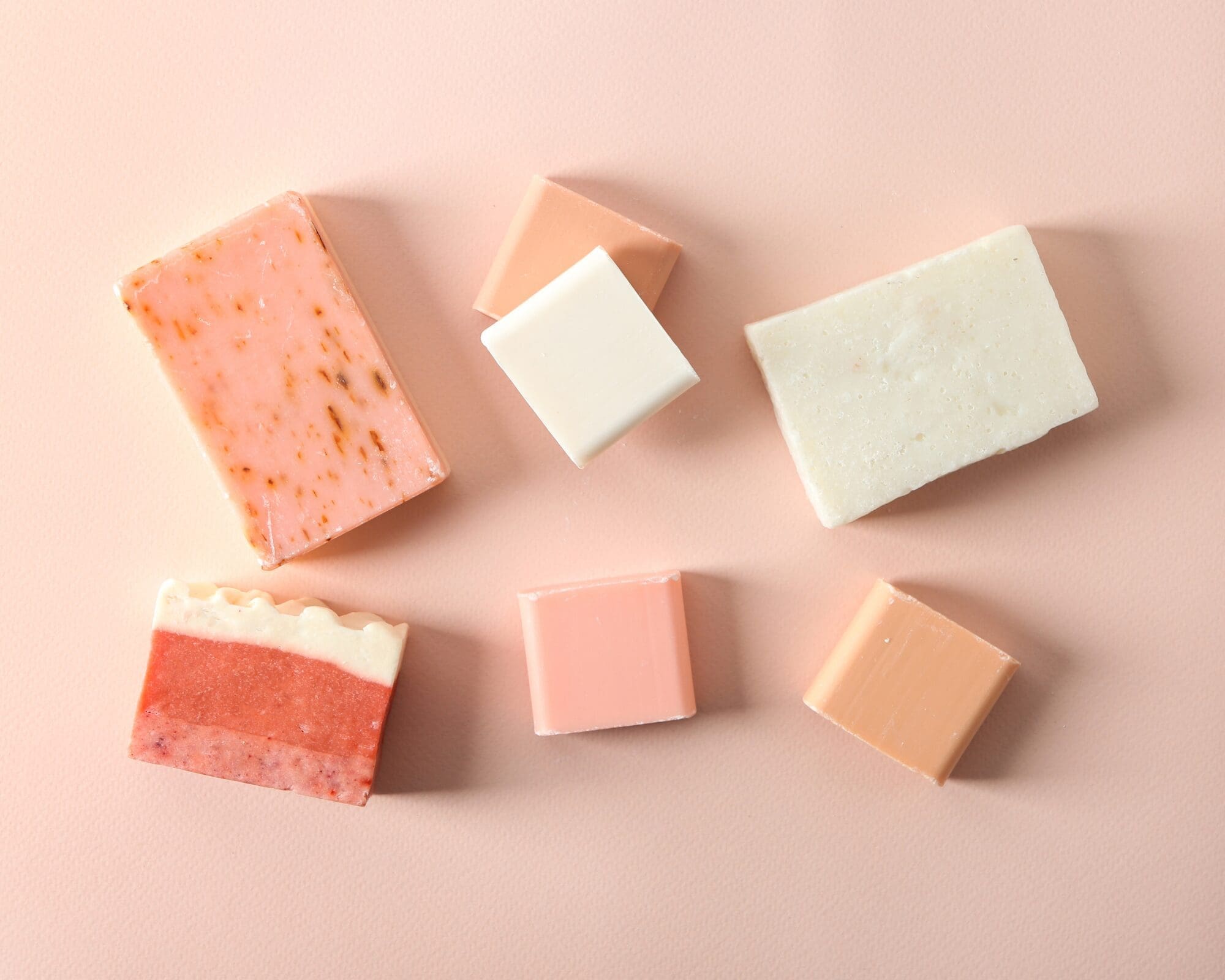
- ex 3401 11 00 Soap in the form of bars, cakes, moulded pieces or shapes for toilet use (including medicated products), that contain or have been made using oil palm.
- ex 3401 20 Soap in forms other than bars, cakes, moulded pieces or shapes, that contain or have been made using oil palm.
- ex 2916 15 Oleic, linoleic, linolenic acids, their salts and esters that have been synthesized using oil palm.
EUDR requirements for these added products apply from 30 December 2027.
Importantly, the production of cosmetics is affected by the EUDR when raw materials sourced in the EU or imported into the EU are listed in Annex I. In such cases, operators have to submit a due diligence statement to an information system established by the European Commission.
Application dates and timelines to submit due diligence statements
The application date is 30 December 2026. For micro and small undertakings, the application date is 30 June 2027. More specifically, from 30 December 2026, large operators and traders must submit due diligence statements before placing on the EU market, or exporting, relevant commodities and relevant products. From 30 June 2027, operators that classify as micro-undertakings or small undertakings must submit their due diligence statements. Importantly, micro and small undertakings established as such by 31 December 2020 fall within this deadline.
What are deforestation-free products?
The EUDR defines “deforestation” as “the conversion of forest to agricultural use, whether human-induced or not”. Deforestation-free” means:
- that the relevant products contain, have been fed with or have been made using, relevant commodities that were produced on land that has not been subject to deforestation after 31 December, 2020; and
- in the case of relevant products that contain or have been made using wood, that the wood has been harvested from the forest without inducing forest degradation after 31 December, 2020.
Companies that place products on the EU market for the first time, or export them, must be able to show that the products are deforestation-free and produced in line with relevant laws in the country of production. For this reason, upstream operators must conduct due diligence to ensure that products are free from deforestation and legally-produced. Upstream operators are those who place a relevant product on the EU market or export it from the EU in the course of a commercial activity.
Any questions on the EUDR and its impact on cosmetics? Contact us here or at coslaw@obelis.net.
References:
EUR.Lex (2024). Regulation (EU) 2023/1115 of the European Parliament and of the Council of 31 May 2023 on the making available on the Union market and the export from the Union of certain commodities and products associated with deforestation and forest degradation and repealing Regulation (EU) No 995/2010. Retrieved on 13 November 2026.
EUR-Lex (2026). Commission Delegated Regulation (EU) 2026/2102 of 13 July 2026 amending Regulation (EU) 2023/1115 of the European Parliament and of the Council as regards the list of relevant commodities and relevant products. Retrieved on 13 November 2026.
CTPA.org.uk (2026). Deforestation-Free Products (EU). Retrieved on 13 November 2026.
Leave a Reply